Wealthsimple vs Qtrade 2026: Which Wins?
In the Wealthsimple vs Qtrade matchup for 2026, both now trade Canadian and US stocks and ETFs at zero commission, so the old fee gap is gone. Pick Wealthsimple for the cleanest app, fractional shares, and direct crypto. Pick Qtrade for deeper research, broader account types, and award-winning support.
Wealthsimple or Qtrade: who should pick which?
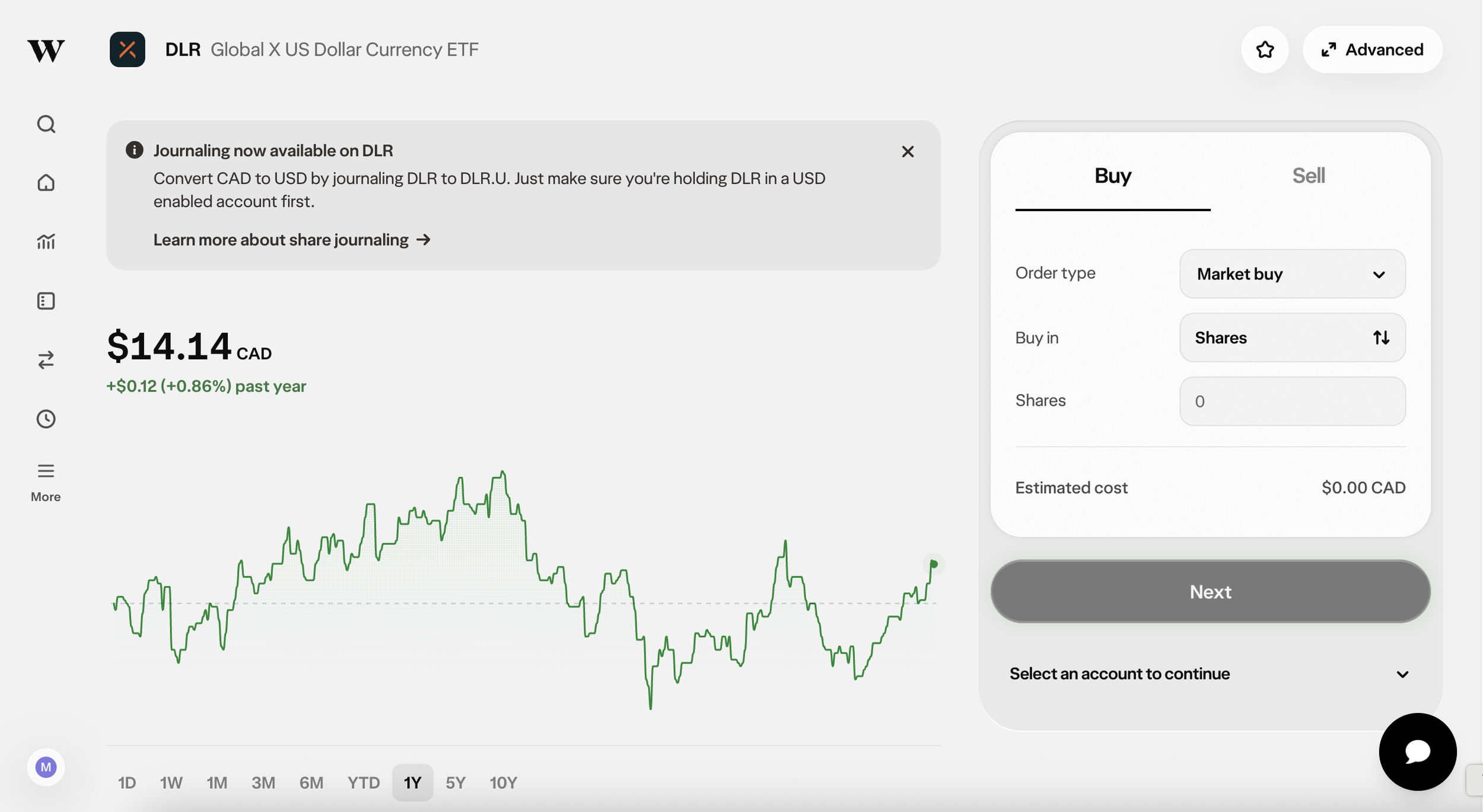
The decision now splits cleanly by what kind of investor you are, not by who is cheaper to trade with. Both are commission-free on Canadian and US stocks and ETFs, both are CIRO regulated and CIPF members, and both let you start with $0. So the question is what you want the platform to do for you.
Wealthsimple is built for the hands-off and mobile-first investor. It has the most polished app in the country, fractional shares so you can buy a slice of a $900 stock, direct crypto in the same app, and a banking side (chequing and high-interest cash) that most brokers do not touch. If you want to open a TFSA, buy XEQT every payday, and not think about it, this is the smoother ride. Our full Wealthsimple review goes deeper on the app and the managed-portfolio option.
Qtrade is built for the investor who actually uses research and wants a human on the phone when something goes wrong. It pairs commission-free trading with a Morningstar-grade research stack, real portfolio analytics, a broader set of registered and non-registered accounts, and a client-service record that wins national awards year after year. If you research before you buy and value support, Qtrade is the stronger tool. Our Qtrade review covers the platform and tools in full.
Now that both are commission free, what actually costs you money?
With trading commissions at zero on both, currency conversion is the cost that matters most for anyone buying US-listed securities. Both charge a foreign-exchange spread when you convert Canadian dollars to buy a US stock from a CAD account. Wealthsimple's published spread is about 1.5%. Qtrade does not publish a rate, and notes only that it may earn revenue on foreign exchange, which independent reviews put in the same rough 1.5% to 2% range. On a $10,000 US purchase, a 1.5% spread is roughly $150 each way.
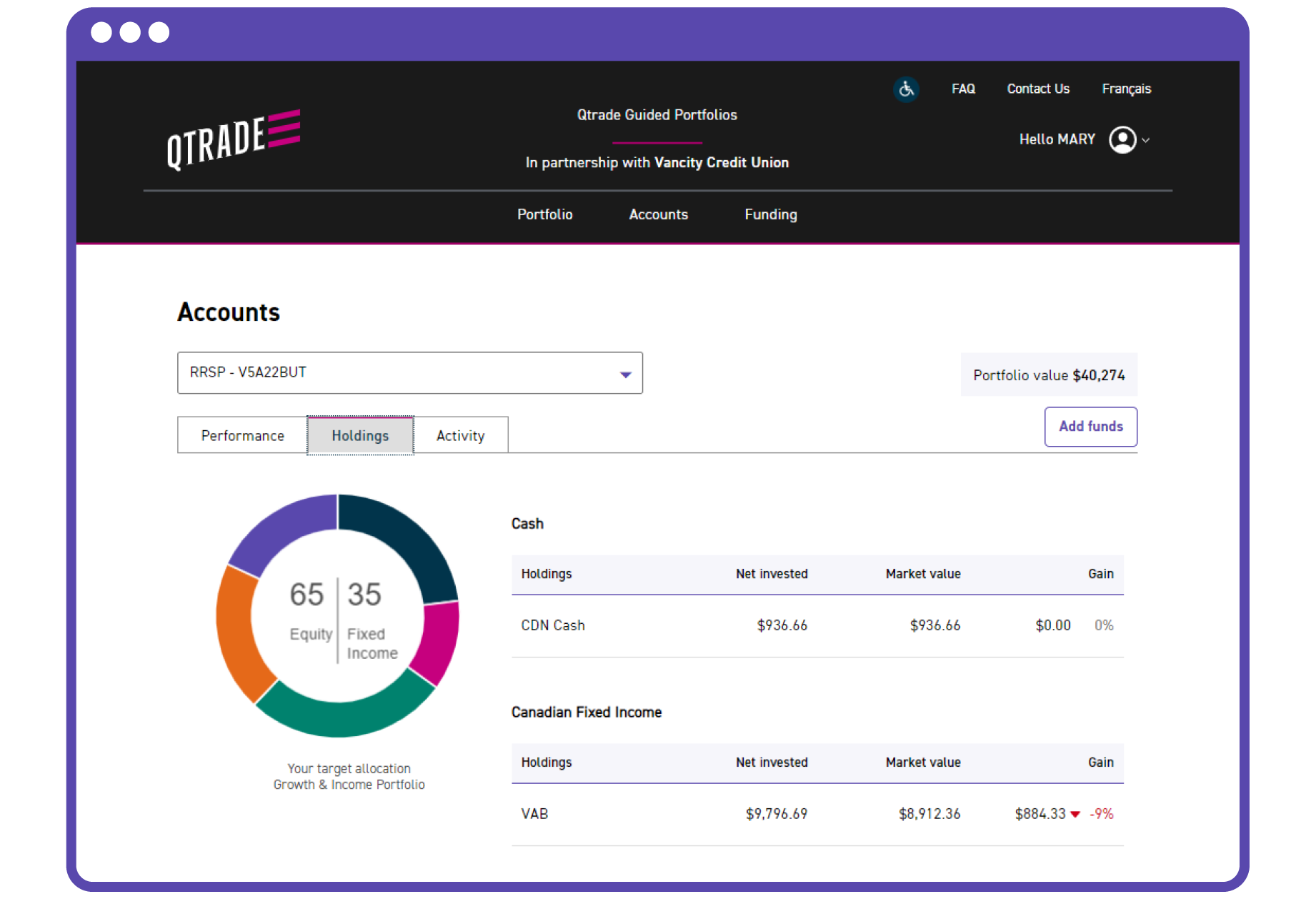
Each broker gives you a way to dodge that spread, and the two approaches are different. Wealthsimple offers a USD account for $10 per month that lets you hold US dollars and convert once instead of on every trade, and that monthly fee is waived for Premium and Generation clients (households with $100,000 or more in assets). It also launched an automated Norbert's Gambit in April 2026, a flat $9.95 trade that converts currency at close to the market rate. Qtrade lets you hold US dollars inside registered accounts (RRSP, RRIF, TFSA, but not FHSA) for US$15 per quarter, so frequent US traders avoid repeat conversions inside their tax-sheltered accounts.
The other cost worth checking is what it takes to switch in. Wealthsimple charges $0 to transfer your account out, and reimburses your old broker's transfer-out fee on incoming transfers of $25,000 or more under its transfer fee reimbursement policy. Qtrade charges $150 to transfer an account out, and runs transfer-fee reimbursement through periodic promotions rather than a standing policy. Promotions on both move around, so check our current promotions page before you fund anything.
Fractional shares, crypto, and account range: where do they split?
This is where Wealthsimple pulls ahead for newer investors. It supports fractional shares, so a $50 deposit can buy a partial share of an expensive stock or ETF and stay fully invested. Qtrade does not offer fractional shares, so you buy whole shares only. For someone dollar-cost-averaging small amounts, that gap is real.
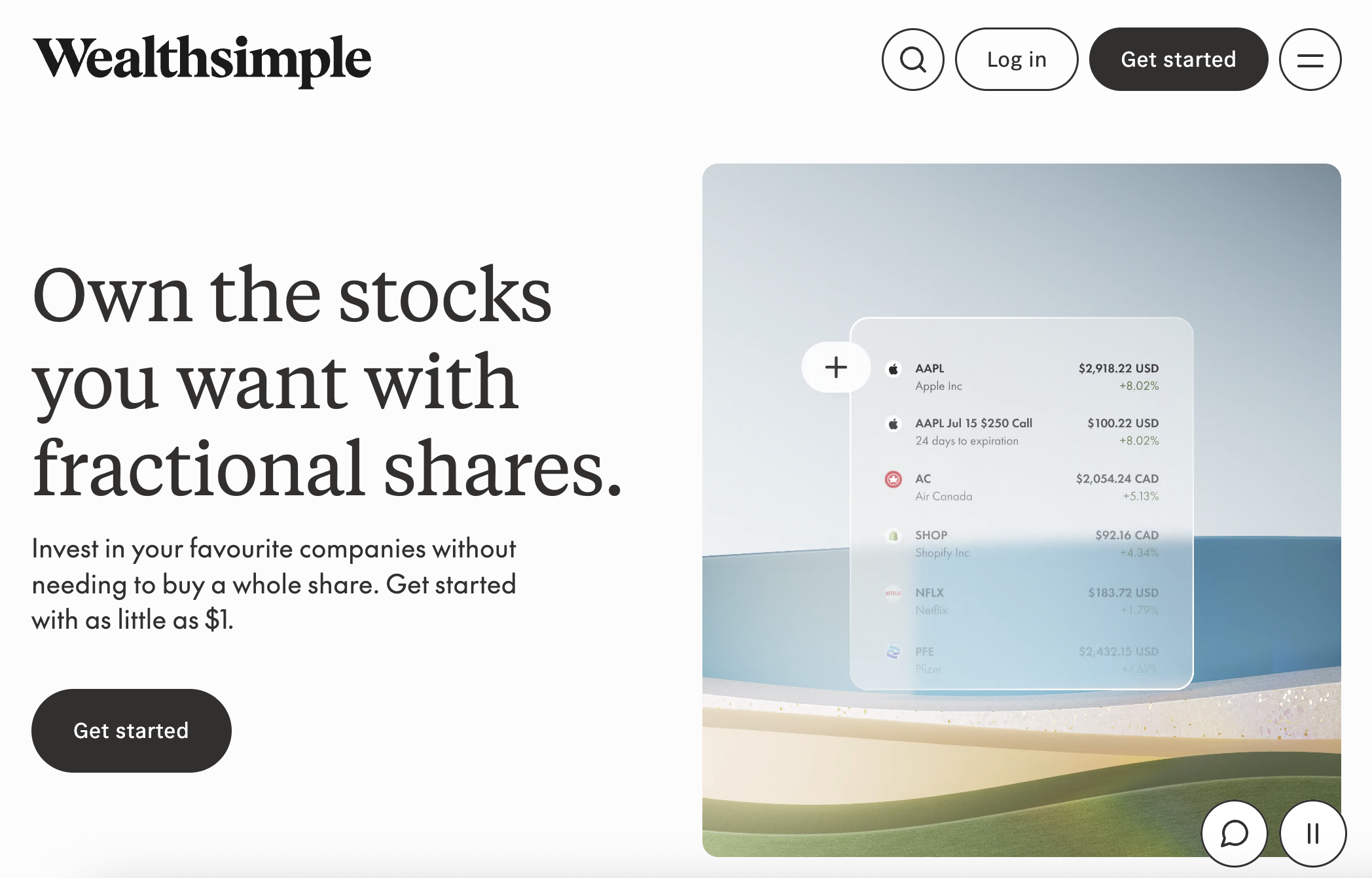
Crypto is the other clear split. Wealthsimple offers direct spot crypto trading, dozens of coins bought and sold in the same app as your stocks, with a spread of roughly 1% to 2% per trade. Qtrade offers crypto exposure through ETFs only, with no direct coin trading, which we re-verified against both brokers in June 2026. If holding actual coins matters to you, only one of these two does it.
Account range tilts the other way. Both cover the registered accounts most Canadians need: TFSA, RRSP, Spousal RRSP, FHSA, and RESP. Qtrade goes a step further with formal trust accounts, corporate accounts, and locked-in plans like LIF, which Wealthsimple does not offer in the same breadth. Neither offers an RDSP. If you need a corporate or trust account, Qtrade is the one that supports it.
Which is better for research, tools, and customer service?
Qtrade, decisively, and it is the single biggest reason to choose it. Qtrade scores 9.0 for research and tools against Wealthsimple's 4.0, the widest category gap between them. You get Morningstar research and analyst ratings, plus proprietary tools like Portfolio Score, Portfolio Simulator, and Portfolio Creator that actually help you build and stress-test a portfolio. Wealthsimple's research is deliberately minimal, fine for a buy-and-hold ETF investor, thin for anyone doing real analysis.
Support follows the same pattern. Qtrade has been ranked at or near the top of Canadian self-directed brokerages by J.D. Power and Surviscor for years, with strong phone and chat coverage. Wealthsimple's support has improved but is weekday-weighted and lands mid-pack, which is the trade-off for its low-touch, app-first model. When real money is involved and something breaks, that difference is felt. For the full scoring breakdown, see how we score.
Which app and platform is easier to use?
Wealthsimple, by a wide margin. Its app earns the top platform score we award (8.5) on design, polish, and how fast a beginner becomes productive. Opening an account and funding it takes minutes, and the interface never makes you feel like you need a manual. For a first-time investor, this is the lowest-friction way into the market in Canada.
Qtrade's platform is good, not exceptional (7.5). The web platform is well-regarded and the app is solid, but it is built for someone who wants data and tools on screen, not for someone who wants the simplest possible tap-to-buy flow. That density is a feature if you use the research, and a mild cost if you just want to buy an index ETF and leave. If you are still deciding between brokers in general, our guide on how to choose a Canadian online broker walks through the trade-offs.
The bottom line
If you are a beginner or a hands-off investor who values a clean app, fractional shares, direct crypto, and integrated banking, open Wealthsimple. If you research your trades, want serious analytics, a broader account lineup, and the best support record of the two, open Qtrade. There is no wrong answer on cost anymore, both are free to trade, so choose on the things that are not free: tools, support, and how you want the platform to feel. Qtrade takes the overall edge at 7.5 to 7.1, but the right pick is the one that matches how you invest. See the full broker comparison table to put them side by side with the rest of the field.
Broker Guide Canada may earn a commission through affiliate links. This does not influence our editorial rankings. See our full disclosure.
FAQs
Is Qtrade really commission free now?
Yes. As of late October 2025, Qtrade trades Canadian and US stocks, ETFs, and mutual funds at $0 commission, confirmed on its own pricing page. Options are $0 plus $0.75 per contract. The old $25 per quarter administration fee was removed at the same time. The only recurring fee that remains is US$15 per quarter on US-dollar registered accounts, and that excludes the FHSA.
Is Wealthsimple or Qtrade cheaper for US stocks?
They are close. Both charge roughly 1.5% to convert Canadian dollars to US dollars on a CAD-account trade. Wealthsimple's escape hatch is a $10 per month USD account (free at $100,000 in assets) or its $9.95 automated Norbert's Gambit. Qtrade's is holding US dollars inside a registered account for US$15 per quarter. Frequent US traders should price out whichever conversion-avoidance route fits their account type.
Can I hold crypto on Qtrade?
Not directly. Qtrade offers crypto exposure through ETFs that trade like any other fund, but it does not let you buy and hold actual coins. Wealthsimple offers direct spot crypto trading in the same app as your stocks. If owning the underlying coin matters, Wealthsimple is the one of the two that supports it.
Does Qtrade have fractional shares?
No. Qtrade trades whole shares only. Wealthsimple supports fractional shares, so you can invest a fixed dollar amount and own a partial share of a high-priced stock or ETF. For investors making small, regular contributions, that is a meaningful difference.
Which has better customer service, Wealthsimple or Qtrade?
Qtrade. It has placed at or near the top of Canadian self-directed brokerages in J.D. Power and Surviscor service rankings for years, with strong phone and chat support. Wealthsimple's support is decent and improving but weekday-weighted, in line with its app-first, low-touch model.
Should I switch from Wealthsimple to Qtrade, or the other way?
Switch toward the platform that fixes your actual pain. Move to Qtrade if you have outgrown Wealthsimple's thin research and want analytics, a corporate or trust account, or better support. Move to Wealthsimple if Qtrade feels heavier than you need and you want fractional shares, crypto, or a simpler app. Wealthsimple reimburses transfer fees on incoming transfers of $25,000 or more, which softens the cost of moving.
