Hidden Fees Canadian Brokers Don't Advertise (2026)
Most Canadian brokers advertise the same thing in 2026: $0 commissions. What none of them advertise is where they actually make money from you. Currency conversion spreads, ECN pass-through charges, account maintenance fees with waiver thresholds you'll never hit, options assignment fees buried in PDF fee schedules, and the silent cost of cash sitting in your account earning nothing while your broker lends it out at 4%. These are the fees that determine what you actually pay - and they vary wildly between brokers.
This guide breaks down every significant fee that doesn't appear in a broker's headline pricing, explains who charges what, and shows you how to avoid the ones that are avoidable.
1. Currency Conversion: The Biggest Fee Nobody Talks About
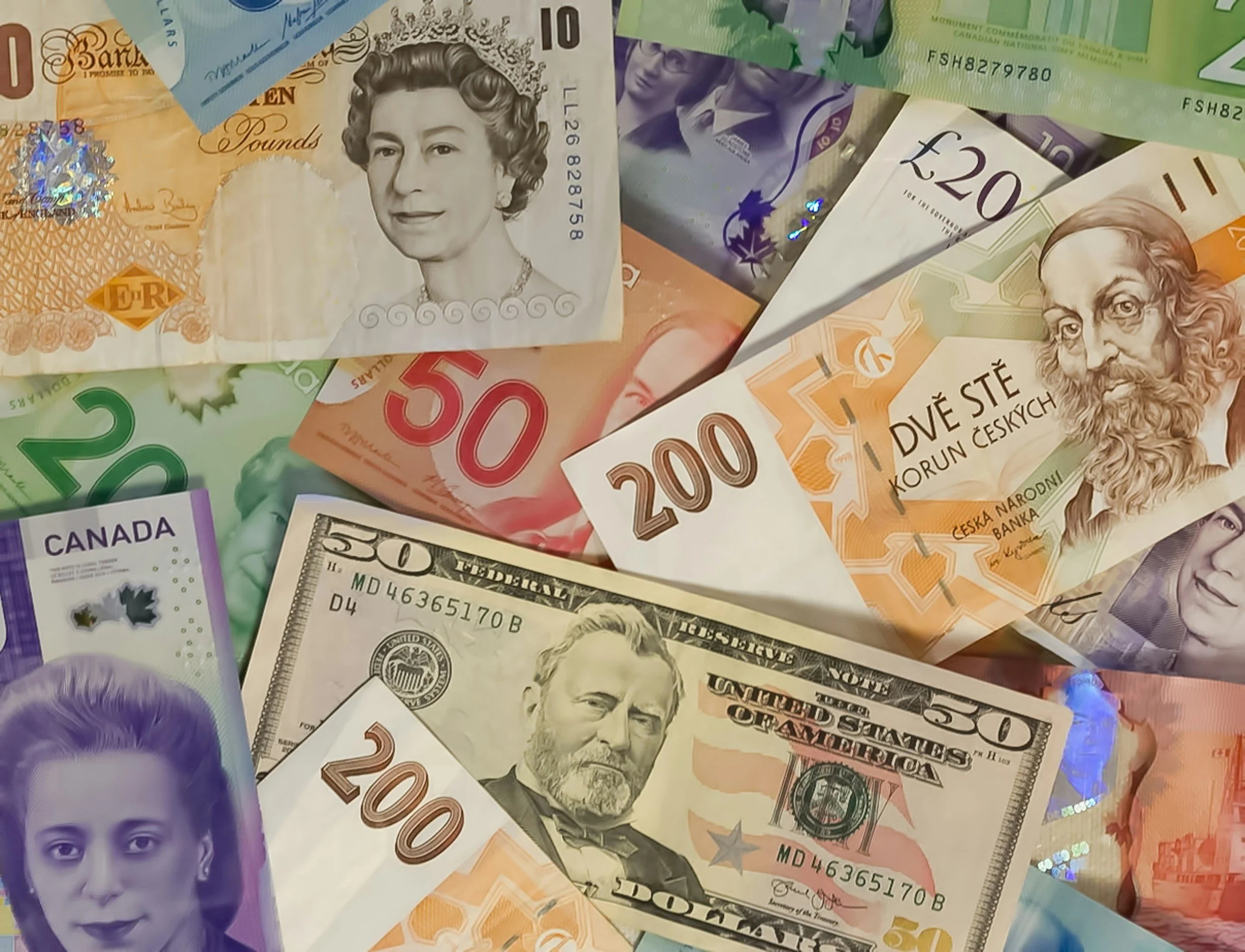
This is the single most expensive fee in Canadian investing and the one brokers work hardest to obscure. Every time you buy a US-listed stock or ETF and your broker converts CAD to USD (or vice versa), you pay a spread - typically 1.5 to 2% of the transaction value.
On a $10,000 USD purchase, that's $150 gone. Do it once a year in each direction (buy, then eventually sell), and you've paid $300 in pure conversion drag. Over a decade of regular US stock purchases, this quietly compounds into thousands of dollars.
What each broker actually charges:
Interactive Brokers: ~0.002% plus a $2 minimum. On $10,000 that's roughly $2.20. This is not a typo. IBKR's FX rate is approximately 70x cheaper than the industry standard.
Questrade: 1.5% on all conversions. Dual-currency accounts let you hold USD permanently and avoid repeated conversions. Norbert's Gambit is fully supported with a flat $9.95 + tax journaling fee - making large conversions (above ~$8,000) significantly cheaper than the 1.5% spread.
Wealthsimple: 1.5% at the Core tier. Drops to 0.05% at Premium ($100K+ in total assets) and Generation ($500K+). For Core users, the practical impact is enormous: buying $5,000 of a US stock costs $75 in FX alone. Norbert's Gambit is available on web at a $9.95 + tax journaling fee, though it launched in beta (March 2026) and is still being refined.
Qtrade: ~1.5-2%. Dual-currency registered accounts available, but at a cost - US$15/quarter unless you qualify for Investor Plus ($100K+ margin balance).
Moomoo: Markets itself as "0% FX fee" but uses a "Moomoo Preferred Rate" with a built-in spread of approximately 0.09% plus $2. Significantly better than 1.5%, though not as transparent as IBKR's stated spread.
Webull: 1.5% markup on conversions. Refreshed every 10 minutes.
Big Bank brokers (TD, BMO, RBC, CIBC, Scotia, NBDB): All roughly 1.5-2%. Most offer USD sub-accounts in registered plans, which avoids repeated conversions once you've moved money into USD.
How to avoid it: If you regularly buy US securities, the lowest-cost option is IBKR by an enormous margin. If you'd rather stay at Questrade or a Big Bank broker that supports Norbert's Gambit, use it for any conversion above ~$5,000 -- the flat journaling fee makes it cheaper than the percentage spread at that threshold. At Wealthsimple, reaching Premium tier ($100K) drops the spread to 0.05%, which is nearly as good as IBKR.
If you only buy Canadian-listed ETFs (XEQT, VEQT, VGRO, etc.), this entire section is irrelevant to you. The ETF provider handles the currency internally, and you never trigger a conversion at your broker. This is one of the strongest arguments for Canadian-listed all-in-one ETFs over buying US-listed equivalents directly.
2. ECN and Exchange Fees: Questrade's "$0 Commission" Asterisk
When Questrade eliminated trading commissions in February 2025, the headline was "$0 trades." The footnote was that ECN (Electronic Communication Network) fees still apply.
ECN fees are charged by the exchanges and alternative trading systems that facilitate your trade. At Questrade, they're passed through to you - typically $0.0035 per share on orders that remove liquidity (i.e., market orders and limit orders that fill immediately against the order book).
What this costs in practice: Buy 100 shares of a $50 stock via market order and you'll pay roughly $0.35 in ECN fees. On a $5,000 purchase, that's 0.007%. On a single trade, it's negligible. Over hundreds of trades per year, it adds up to a few dollars - still far less than a $9.95 commission.

How to avoid it: Use limit orders that add liquidity (orders placed inside the bid-ask spread that sit on the book before filling). These attract ECN rebates instead of fees. For most retail investors buying ETFs monthly, the practical impact is under $5 per year - genuinely not worth worrying about.
Who else charges ECN fees? Most brokers absorb ECN costs into their commission structure or spread. Questrade is unusual in passing them through explicitly. Qtrade states they don't pass on ECN fees unless they result from "repeated, high-volume trades on the active side of the Canadian market" - effectively absorbing them for normal retail use. IBKR's tiered pricing model includes exchange fees as a line item, but their per-share commissions already include these costs on the fixed pricing plan.
Bottom line: ECN fees at Questrade are real but trivially small for typical investors. If someone tells you Questrade's "$0 commissions" are misleading because of ECN fees, they're technically correct and practically wrong.
3. Account Maintenance and Inactivity Fees: The Tax on Small Portfolios
Independent brokers have eliminated these almost entirely. Big Bank brokers have not.
The pattern is clear: independent brokers don't charge account fees. Big Bank brokers charge $25/quarter or $100/year, with waiver thresholds that many beginning investors won't meet. For a new investor with $5,000 in a TFSA at TD, the $25/quarter fee ($100/year) represents a 2% annual drag on their portfolio - worse than most mutual fund MERs.
The under-25 exception: CIBC Investor's Edge waives all fees (including trading commissions) for investors aged 18-24 with a Smart Start chequing account. NBDB waives the $100 annual fee for investors aged 30 and under. If you're young and already bank with one of these institutions, this is a meaningful benefit - but it expires, and transferring out later costs $100-$135.
How to avoid it: Use an independent broker. If you insist on a Big Bank, meet the waiver threshold or take advantage of age-based exemptions.
4. The USD Account Fee: Wealthsimple's Hidden Subscription
Wealthsimple charges $10 per month to maintain a USD account - the feature that lets you hold US dollars in your TFSA or RRSP and avoid the 1.5% FX spread on every trade.

This fee is waived if you have $100,000+ in total Wealthsimple assets (Premium tier) or $500,000+ (Generation tier). For everyone else, it's $120/year for the privilege of holding USD.
When it makes sense: If you buy US stocks frequently enough that $120/year is less than what you'd pay in FX conversion spreads, the subscription saves money. At 1.5% conversion cost, you'd need to convert roughly $8,000+ per year for the USD account to break even versus just paying the spread each time.
When it doesn't: If you buy US stocks once or twice a year in small amounts, or if you exclusively buy Canadian-listed ETFs, the $10/month subscription is pure waste. And if you're going to hold $100K+ at Wealthsimple anyway, it's free - so the fee only penalizes smaller accounts, which is exactly the group least able to absorb it.
How to avoid it: Buy Canadian-listed ETFs instead of US-listed equivalents (eliminates the need for USD entirely). Or use Questrade or a Big Bank broker with free dual-currency registered accounts. Or hit $100K at Wealthsimple and the fee disappears.
5. Options Assignment and Exercise Fees: The Fine Print That Costs $30+
If you sell options (covered calls, cash-secured puts), you'll eventually get assigned. Most brokers charge a fee for this that doesn't appear in their headline options pricing.
What each broker charges for assignment:
Wealthsimple: $0 commissions, $0 per contract, $0 assignment. Genuinely zero cost at every step - unique in Canada.
Interactive Brokers: $0 assignment fee. Standard commissions apply to the resulting stock transaction.
Questrade: No separate assignment fee charged.
Qtrade:$30 flat fee per assignment. This is confirmed on Qtrade's official fee schedule. If you're selling weekly covered calls, this adds up quickly.
Moomoo: $0 for exercise and assignment - a competitive differentiator they explicitly market.
Big Bank brokers: Vary. NBDB charges $28.95 for options assignments and automatic exercises, confirmed in their published fee schedule. Other Big Banks charge similar amounts ($25-$45 range) - check each broker's fee PDF before trading options.
Why this matters: A covered call strategy on a $50 stock that gets assigned monthly costs $360/year in assignment fees alone at Qtrade. At Wealthsimple or IBKR, the same strategy costs $0 in assignment fees. For options sellers, this fee is often larger than the per-contract commission they're trying to minimize.
6. Transfer-Out Fees: The Exit Toll
We covered this in detail in our guide to transferring your brokerage account, but it belongs on any hidden-fee list because it's the fee your broker is least motivated to tell you about.
$75: Webull
$100:CIBC
Remember: this is per account. Three accounts at TD = $450. And the receiving broker almost always reimburses the fee -- Questrade does so with no minimum transfer, Wealthsimple requires $25K+, and most others require $15K-$25K.
7. Uninvested Cash: The Fee You Never See
This isn't a fee you're charged. It's a return you're not earning.
When cash sits in your brokerage account - between selling one position and buying another, or as a cash buffer, or because you deposited funds but haven't invested yet - most Canadian brokers pay you little to nothing on that balance. Meanwhile, they're lending your cash out at prevailing interest rates and keeping the spread.
What you earn on uninvested cash by broker:
Interactive Brokers: Pays interest on CAD balances above $13,000 (approximately 1.55% for accounts with $100K+ NAV) and USD balances above $10,000 (~3.14%). Below those thresholds: $0. The best cash interest program among Canadian brokers, but still far less than a HISA.
Moomoo: Promotional cash sweep rate of 6% on the first $10,000 CAD (within 60 days). After the promo period, rates drop substantially.
Wealthsimple: Uninvested cash in self-directed accounts (TFSA, RRSP) earns minimal interest - near 0%. The Wealthsimple Cash Account pays a competitive rate (around 3.5-4%), but that's a separate cash product, not your trading account.
Questrade, Qtrade, Big Banks: Effectively 0% on uninvested brokerage cash in most account types. Some Big Banks pay token amounts (0.01-0.05%) that round to nothing on typical balances.
The real cost: If you leave $5,000 uninvested in your TFSA for six months while deciding what to buy, and your broker pays 0% while a HISA ETF like CASH.TO yields ~4.5%, you've forfeited roughly $112 in tax-free interest. That's not a fee on your statement, but it's money that left your pocket.
How to avoid it: Park uninvested cash in a money market ETF (CASH.TO, ZMMK, PSA) inside your brokerage account. They yield 4%+ with daily liquidity. Buy them commission-free at Wealthsimple, Questrade, Qtrade, or NBDB. Sell when you're ready to deploy the cash. This is the single easiest free-money optimization in Canadian investing and most people don't do it.
8. Mutual Fund Short-Term Trading Penalties
If you buy a mutual fund at a Canadian brokerage and sell it within 30-90 days, many brokers charge a short-term trading penalty - typically 1-2% of the redemption value.
Qtrade: 1% fee (minimum $45) on mutual funds held less than 90 days.
Questrade: $9.95 per mutual fund trade, plus potential short-term redemption penalties.
Big Banks: Most impose early redemption fees on funds held under 30-90 days.
Why it matters less than it used to: Very few self-directed investors should be buying mutual funds at a discount brokerage in 2026. ETFs accomplish the same thing with lower MERs, better transparency, and no redemption penalties. If your advisor or bank previously held you in mutual funds and you're transferring to a self-directed account, switching to equivalent ETFs during or after the transfer eliminates this fee category entirely.
9. Wire Transfer Fees
If you need to move money in or out via wire transfer (international transfers, large sums, USD movements), every broker charges for this - and the fees are surprisingly high.
Questrade: $20-$45 for outgoing wires.
Interactive Brokers: 1 free withdrawal per month (EFT or wire). Subsequent withdrawals incur a fee. Plus potential correspondent bank charges.
Big Banks: Typically $15-$50 depending on currency and destination.
How to avoid it: Use EFT (electronic funds transfer) or Interac e-Transfer for all deposits and withdrawals. These are free at most brokers. Wire transfers are only necessary for international movements or very large sums that exceed Interac limits.
10. Real-Time Market Data Fees
Basic delayed quotes (15-minute lag) are free everywhere. Real-time data - Level 1 quotes and especially Level 2 (depth of book) - sometimes costs money.
Interactive Brokers: Offers various market data bundles. US Securities Snapshot ($1.50/month, waived with $30+ in commissions) is typical. Adds up if you subscribe to multiple exchanges.
Moomoo: Free real-time Level 2 data on US markets - a significant perk, especially for active traders. This is typically a $15-25/month subscription elsewhere.
Wealthsimple: Real-time quotes included. No paid data tiers.
Questrade: Real-time Level 1 included. Advanced data packages available at additional cost.
Big Banks: Real-time quotes generally included. Advanced data for active traders at TD (Advanced Dashboard) and others may have eligibility requirements.
For most retail investors buying ETFs monthly, free delayed quotes are perfectly adequate. Real-time data matters for active traders placing limit orders on volatile stocks - and even then, free alternatives (your broker's mobile app, Yahoo Finance, Google Finance) are usually sufficient.
How Much Are You Actually Paying?
Let's put real numbers on three investor profiles.
The Bottom Line
"$0 commissions" is the headline every broker wants you to see. The real cost of using a Canadian brokerage lives in the footnotes: FX conversion spreads, account maintenance fees, USD account subscriptions, options assignment charges, and the opportunity cost of uninvested cash earning nothing.
The brokers that are cheapest on headline commissions aren't always cheapest in total cost. Wealthsimple's $0 commissions become expensive the moment you buy US stocks without a USD account. Questrade's $0 commissions come with ECN pass-throughs (negligible) and a $150 transfer-out fee (not negligible). Big Bank $0-commission leader NBDB still charges $135 to leave and $100/year if your balance is under $20K.
The genuinely cheapest broker in Canada - when you add up every fee - is Interactive Brokers. Near-zero FX costs, no account fees, no transfer-out fees, the lowest margin rates in the country, and interest paid on uninvested cash. The trade-off is a platform that's genuinely difficult for beginners to use. For everyone else, Wealthsimple (for CAD-only investors) and Questrade (for anyone buying US stocks) remain the best overall value.
For a full side-by-side comparison of twelve Canadian brokers, including every fee category discussed here, see our comparison table. To see what sign-up bonuses and transfer-fee rebates are currently available, check our bonuses page.
Broker Guide Canada may earn a commission through affiliate links. This does not influence our editorial rankings. See our full disclosure.
