The Best Data Centre Investment Plays for Canadian Investors in 2026
Canadian investors do not need to buy Nvidia or chase US mega-caps to get exposure to the data centre buildout. Several TSX-listed companies sit at different points in the value chain, from the hardware and power equipment inside the facilities to the utilities and infrastructure networks that keep them running. Here is where the opportunities are right now.
Disclaimer: this is not financial advice. This is research and educational content. Always conduct your own due diligence or consult a financial professional before making investment decisions.
Why are data centres a major investment theme in Canada?
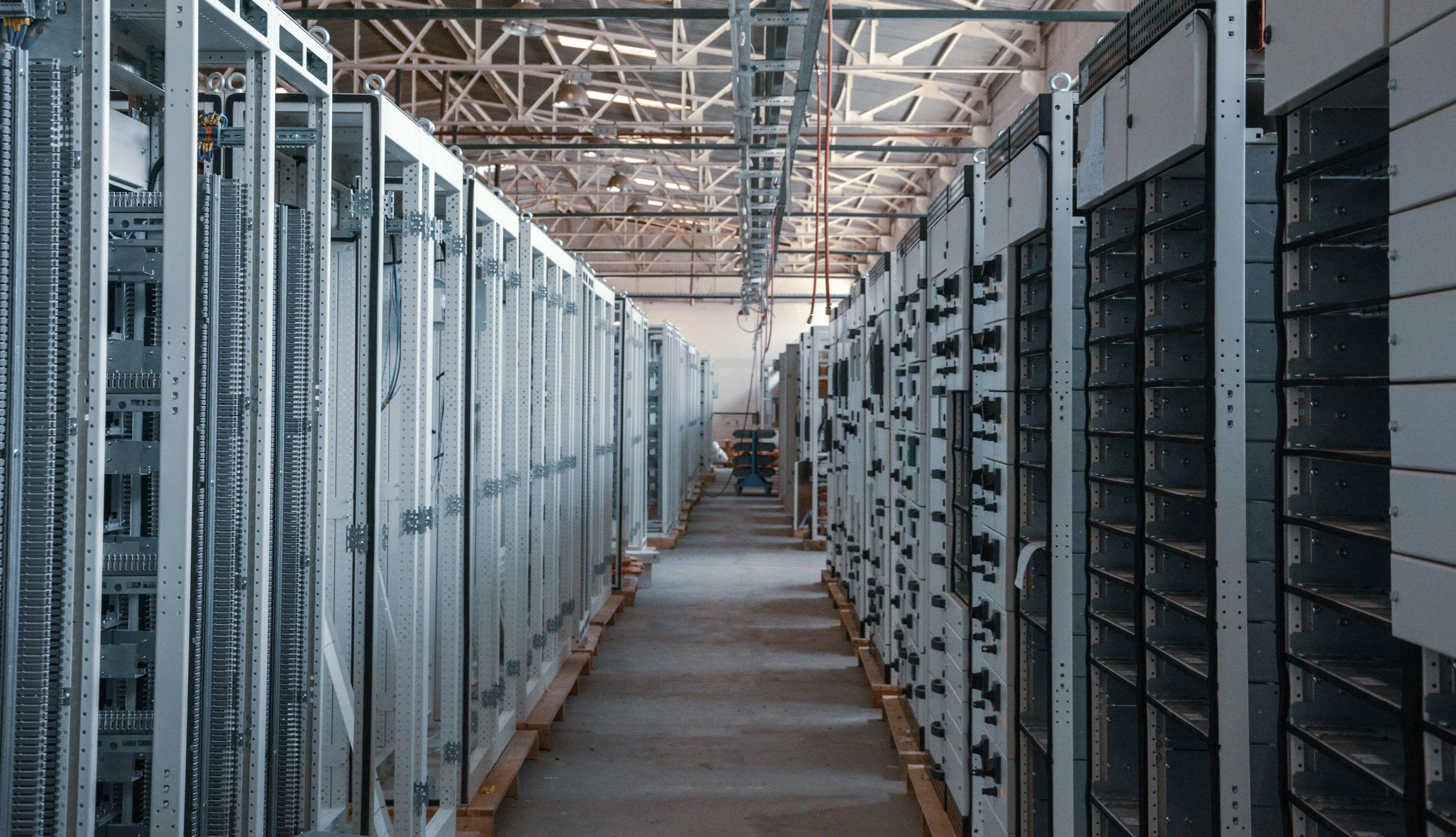
The numbers behind the global data centre buildout are staggering. Hyperscaler capital expenditure for 2026 is projected at US$725 billion or more, up from roughly US$650 billion at the start of the year. Canada is positioning itself as a destination for that spending.
The federal government has committed $2 billion over five years under its Enabling Large-Scale Sovereign AI Data Centres initiative, and the Canadian data centre market is projected to grow from roughly US$6.5 billion in 2025 to US$13.3 billion by 2031.
Canada has structural advantages that make it attractive for data centre operators: abundant and relatively inexpensive hydroelectric power, a cool climate that reduces cooling costs, political stability, proximity to major US markets, and a skilled workforce. That is why companies like Microsoft, Amazon Web Services, Equinix, and Telus are all building or expanding Canadian facilities. For self-directed investors, the question is not whether the buildout will happen. It is how to get exposure to it through a Canadian brokerage account.
What are the best direct data centre plays on the TSX?
Two TSX-listed companies stand out as the closest things to pure plays on data centre infrastructure spending.
Celestica (TSX: CLS) designs and manufactures the networking switches, server racks, and hardware platform solutions that go inside hyperscale data centres. Its Q1 2026 results were exceptional: revenue rose 53% year over year to US$4.05 billion, adjusted EPS jumped 80% to US$2.16, and the company raised its full-year 2026 revenue guidance from US$17 billion to US$19 billion. The Connectivity and Cloud Solutions segment, which covers data centre hardware, now represents roughly 80% of total revenue and grew 76% year over year. Celestica is not cheap after a strong run, but it has the most direct exposure of any TSX-listed stock to the actual hardware inside data centres.
Telus (TSX: T) is a different kind of play. Beyond its traditional telecom business, Telus is building Canada's sovereign AI infrastructure. Its first Sovereign AI Factory in Rimouski, Quebec, opened in September 2025 and is already sold out. The company is now developing a three-site cluster in British Columbia, with facilities in Kamloops and two locations in Vancouver, designed to scale to more than 60,000 GPUs and 150 megawatts of capacity by 2032. Telus reported 22% double-digit revenue growth in AI-enabling capabilities in Q1 2026 and generated $583 million in free cash flow, up 19% from last year. It is targeting roughly $2 billion in combined AI revenue across Telus Digital and Telus Business by 2028. The dividend yield adds income while the data centre story develops.
Which "picks and shovels" stocks benefit from the buildout?
Some of the best-performing data centre investments are not data centre companies at all. They sell the equipment and infrastructure that data centres cannot operate without.
Hammond Power Solutions (TSX: HPS.A) makes dry-type transformers, power quality products, and custom electrical equipment. Every data centre needs reliable, precise power delivery, and Hammond sits directly in that supply chain. Q1 2026 was a record quarter: sales hit $265 million (up 31.5% year over year), adjusted EPS rose 30% to $2.08, and the order backlog surged roughly 95% from the prior year. The company was added to the S&P/TSX Composite Index effective June 22, 2026, and completed the acquisition of AEG Power Solutions for approximately $370 million. The stock has risen sharply, up more than 80% year-to-date, which means the good news is priced in to a significant degree. Valuation discipline matters here.
Brookfield Infrastructure (TSX: BIPC or BIP.UN) takes a broader approach. It owns and operates infrastructure assets globally, including cell towers, fibre networks, and data centres, alongside utilities, transport, and midstream assets. The data segment gives investors exposure to digital infrastructure without betting on a single technology cycle. Q1 2026 FFO came in at US$709 million, and the company yields roughly 4.7%. For investors who want diversified infrastructure exposure with a meaningful income stream, Brookfield is the institutional-grade option.
How can Canadian utilities benefit from data centre demand?
Data centres are enormous consumers of electricity. A single large-scale facility can draw 100 megawatts or more, equivalent to powering tens of thousands of homes. That creates a direct tailwind for regulated utilities that own the transmission and distribution infrastructure.
Fortis (TSX: FTS) is the largest utility on the TSX with a market capitalization around $31 billion. It has a $29 billion capital expenditure program targeting roughly 7% annual rate base growth over the next five years, and its 51 consecutive years of dividend increases make it one of Canada's longest-running dividend growth stories. The yield sits near 3.5%. Fortis is not a data centre stock, but rising electricity demand from AI facilities directly supports its capital spending runway and earnings growth.
Hydro One (TSX: H) owns most of Ontario's electricity transmission system and serves millions of distribution customers. Ontario expects 16 new data centres to connect to its grid over the next decade, representing an estimated 13% of new electricity demand in the province. Q1 2026 EPS rose 8.3% to $0.65, and transmission revenue climbed 4.4%. The yield is lower at around 2.4%, but the growth profile is tied directly to Ontario's grid expansion needs.
Is there a data centre REIT angle for Canadian investors?
Granite REIT (TSX: GRT.UN) does not own data centres directly, but it owns industrial and logistics properties across North America and Europe. Data centre construction creates a massive physical supply chain: electrical gear, cooling systems, backup power, steel, cabling, and construction materials all need storage and distribution space. Granite reported Q1 2026 net operating income of $134.2 million (up from $125.7 million a year earlier), an AFFO of $1.52 per unit, and a payout ratio of 63%. It pays monthly distributions.
For investors who want direct data centre REIT exposure, the US-listed names Equinix (NASDAQ: EQIX) and Digital Realty (NYSE: DLR) are the dominant pure plays. Both are accessible through any Canadian brokerage that offers US market trading, including Questrade, Wealthsimple, and Interactive Brokers. Just watch the foreign exchange costs, which vary significantly between brokerages. Our broker comparison page breaks down FX fees side by side.
What about ETFs for data centre exposure?
There is no TSX-listed ETF focused exclusively on data centres. Canadian investors who want a single-ticker approach need to look at US-listed options.
The Global X Data Center and Digital Infrastructure ETF (NASDAQ: DTCR) tracks the Solactive Data Center REITs and Digital Infrastructure Index, holding companies that operate data centres, cell towers, and digital infrastructure hardware. It carries a 0.50% expense ratio and has gathered roughly US$2.3 billion in assets. Top holdings typically include Equinix, Digital Realty, and other US-focused data centre operators.
Buying a US-listed ETF from a Canadian account means dealing with currency conversion. Brokerages like Interactive Brokers offer low FX spreads (around 0.002%), while others can charge 1.5% or more per conversion. If you are building a meaningful position, the FX cost difference over time is substantial. See our guide on how to choose a Canadian online broker for more on managing currency costs.
What are the risks of investing in data centre stocks?
The data centre buildout is real, but it is not without risk. A few things to watch:
Valuation: Several of these stocks have already repriced sharply higher. Celestica and Hammond Power in particular have had strong runs. Buying at elevated multiples means less margin of safety if growth slows.
Concentration risk: Celestica derives a large share of revenue from a small number of hyperscaler customers. If any single customer pulls back, the impact would be significant.
Interest rates: REITs and utilities are sensitive to borrowing costs. If the Bank of Canada holds rates higher for longer, it weighs on these sectors.
Overcapacity: The current frenzy of data centre construction could eventually lead to oversupply, putting pressure on occupancy rates and rental pricing.
Technology risk: A shift in AI architecture, a move toward more efficient models that require less compute, or a new cooling technology could change the economics of the buildout. None of these risks invalidate the thesis, but they argue for diversification rather than concentration in a single name.
The bottom line
The data centre buildout is one of the largest infrastructure spending cycles in a generation, and Canadian investors have several ways to participate without leaving the TSX. Celestica and Telus offer the most direct exposure. Hammond Power and Brookfield Infrastructure give you the picks-and-shovels angle. Fortis and Hydro One let you play the rising power demand at lower risk. And Granite REIT captures the industrial supply chain behind the construction. The smartest approach is probably not picking one winner, but building a basket that covers multiple layers of the value chain, from the hardware inside the facility to the power grid feeding it. Broker Guide Canada may earn a commission through affiliate links. This does not influence our editorial rankings. See our full disclosure.
FAQs
Are data centre stocks a good investment in Canada?
Data centre stocks can be attractive for Canadian investors because the underlying demand for compute power, driven by AI, cloud computing, and digital transformation, is structural and multi-year. The key is entry price. Many of these stocks have already moved significantly higher, so position sizing and valuation discipline matter.
Can I buy data centre REITs in my TFSA or RRSP?
Yes. Canadian-listed stocks like Granite REIT can be held in any registered account with no foreign withholding tax issues. US-listed REITs like Equinix and Digital Realty can also be held in registered accounts, but dividends paid into a TFSA are subject to 15% US withholding tax that cannot be recovered. In an RRSP, the Canada-US tax treaty exempts US dividends from that withholding.
Which Canadian broker is best for buying US-listed data centre ETFs?
The main consideration is foreign exchange cost. Interactive Brokers charges the lowest FX spread at roughly 0.002%. Questrade charges 1.5%, and Wealthsimple charges 1.5% standard but offers a reduced spread for Premium and Generation tier members. Our comparison table has the full breakdown.
Is Celestica a data centre stock?
Celestica is listed on both the TSX and NYSE (ticker: CLS). It designs and manufactures networking switches, server rack infrastructure, and hardware platforms used in hyperscale data centres. Its Connectivity and Cloud Solutions segment, which serves data centre customers, now represents about 80% of total revenue.
What is Canada's sovereign AI data centre initiative?
The federal government's Enabling Large-Scale Sovereign AI Data Centres program commits $2 billion over five years to build domestically owned, high-performance AI compute infrastructure. Telus is the most visible private-sector participant, with its sold-out Rimouski facility and a planned three-site BC cluster scaling to 60,000 GPUs by 2032.
How much electricity do data centres use?
A single hyperscale data centre can consume 100 megawatts or more, roughly the electricity demand of 80,000 to 100,000 homes. Ontario alone expects 16 new data centres to connect to its grid over the next decade, adding an estimated 13% to new provincial electricity demand. This is why regulated utilities like Fortis and Hydro One are considered indirect beneficiaries.
